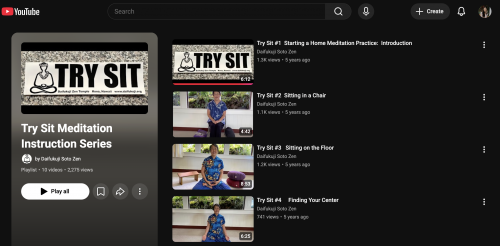
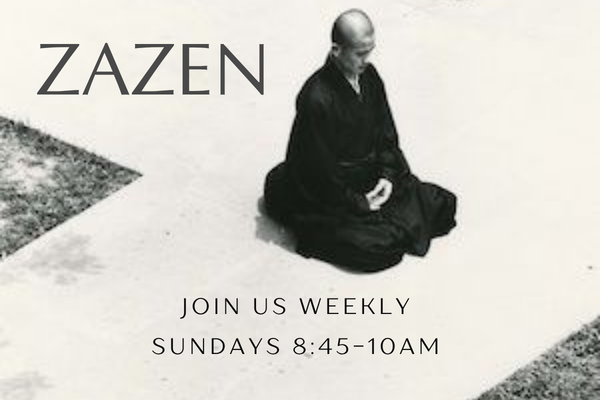
- Sunday mornings at 8:45-10am with Cam Shinzen, Kim Shokan and Todd Donin
For any questions please call or text Cam on 808-855-8300.
This group is free of charge for all to attend, though donations are gratefully received to support the upkeep of our temple.
Sunday Schedule – Zazen
8:45 am: Arrive, slow down and settle in. If you are a beginner or newcomer, please plan to arrive before or by this time so that we can welcome you and check you are comfortable sitting in the Zendo, which is located at the back of the social hall.
9:05-9:25 am: First sitting period
9:25-9:35 am: Kinhin (walking meditation)
9:35-9:55 am: Second sitting period
Sunday Schedule – Service
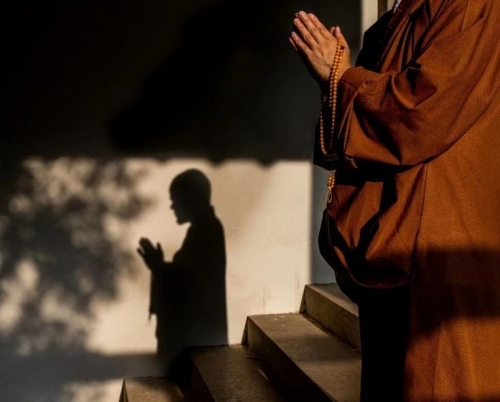
10-10:20am: Service in the Hondo (main temple), consisting of chanting the Heart Sutra/Maka Hannya Shingyo (text provided), bowing and offering incense. A short Dharma talk (10 min) will be offered most weeks by Cam, Kim or Todd to share some aspect of Zen or Buddhist practice or teachings.
* On the 3rd Sunday of every month we do our Kannon-ko service outdoors in front of the Kannon statue (Boddhisattva of Compassion and Peace) in the shade of the Bodhi tree.
10:30 am: Matcha, snacks, talk story and fellowship in the social hall.
On the first Sunday of each month, between 10:30-11am we participate in samu (work period) where people can select cleaning or organizing tasks that support the temple space. This is optional.
All are welcome, come as you are.
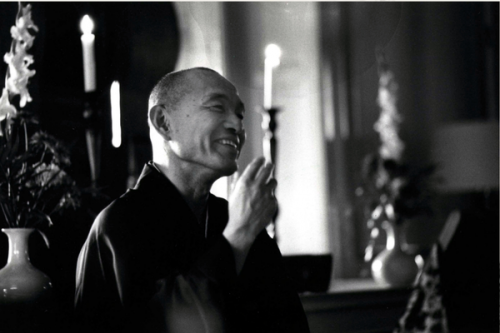
“Where you stand, where you are, that’s what your life is right there, regardless of how painful it is or how enjoyable it is. That’s what it is.”
— Taizan Maezumi Roshi
Photo credits: Ikko Narahara, Koike Ryunosuke, Peter Cunningham
Zendo Etiquette
We encourage all of us to show up in a way that supports the group and promotes harmonious and compassionate practice. From this intention, please be mindful of the following:
- Dress: Wear comfortable, loose-fitting clothing, covering the shoulders, mid-section and thighs. Avoid strong graphics.
- Scents: Avoid strong scents or perfumes. We do not use incense in the Zendo on Sundays to respect people’s sensitivities, but we do on Tuesday nights.
- Possessions: Please leave phones, keys, water bottles and other possessions outside if you can. We have never had a theft.
- Timing: Please take your seat 2 minutes before the bell is rung at 9:05am so that we can begin with an established sense of peace. If you arrive soon after you may slip in quietly and discreetly. If you arrive beyond 10 minutes after, please sit outside (you may find a chair or place to sit, within in hearing range), and join in at kinhin at 9:25-35am, with clappers or wooden blocks marking the beginning and end of this period. You may also enter the just before the second sitting period at 9:35am, sounded by the bell.
FAQ
Q: I am a beginner and/or totally new to this tradition. Am I welcome?
A: Yes! We believe the practice of still, silent sitting is something accessible to every person and we will support you to find a way to do so comfortably in our space. Please ensure you come early (8:45am latest) to have time to settle in, ask questions and receive guidance or suggestions as needed.
Q: I cannot sit on the floor, what should I do?
A: We have chairs you may use in the Zendo. Some people like to use a cushion behind their low back to promote an upright spine and avoid slouching.
Q: Are there any protocols I should know in advance?
A: Here are a few things to know:
1. When you enter and exit the Zendo, please bow with your hands together in the direction of the altar, offering the crown of your head, to symbolize humility and respect.
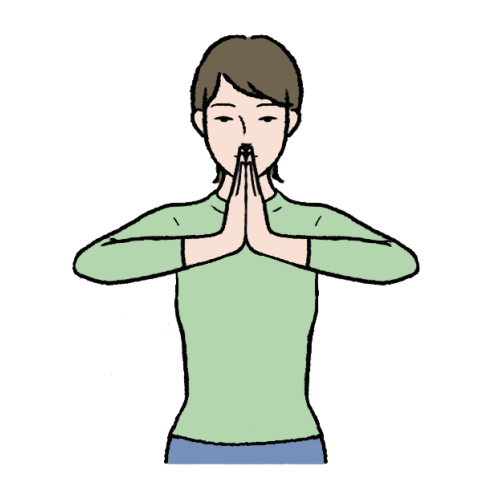
2. When you arrive to your cushion, bow once to your cushion, then face the center of the room and make a second bow. This greets the group and the space. We do the same at the end of each sitting period.
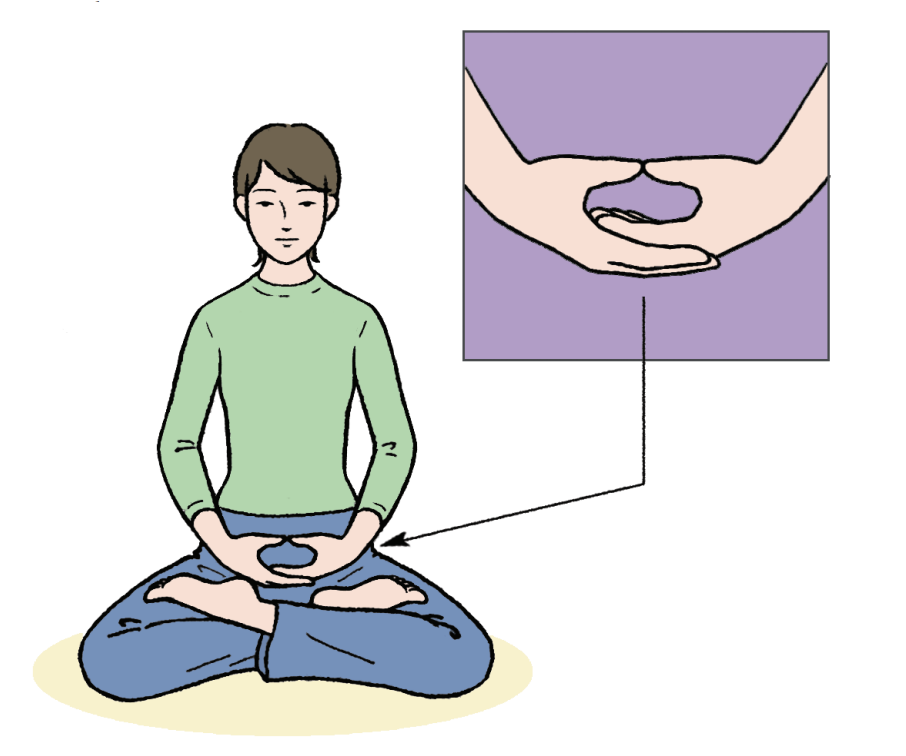
3. When sitting, the hands form the hokkai-join (cosmic mudra) in front of your hara (low belly). We sit facing the wall, to help quieten the senses and promote simple direct experience. The jikido (timekeeper) and godo (monitor) will face inwards to support the group and any needs that might arise. Please look to them if you need something during a sitting period.
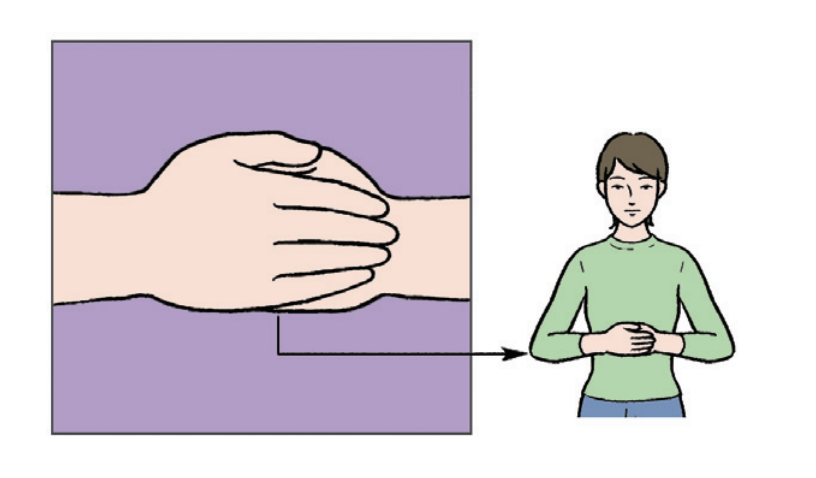
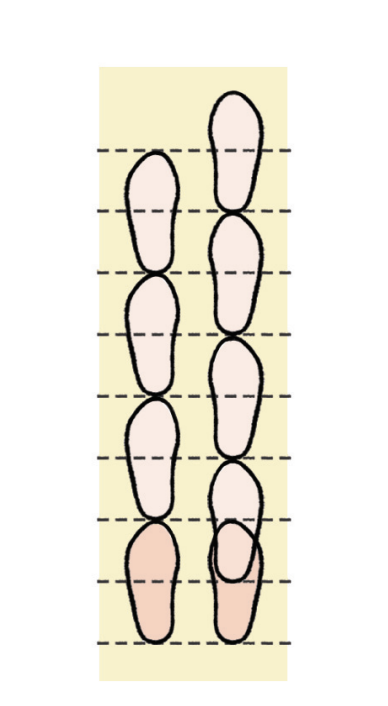
4. In kinhin (walking meditation), the hands are in shashu mudra (left hand in a gentle fist with thumb tucked in, and right hand rests over the top), positioned in front of the waistline. With each breath a small half step forward is taken. It is a slow mindful movement. Please try to fill the space evenly between the person in front of and behind you, walking neither too fast nor too slow.
5. The group aspires to sit in stillness and silence for the whole period. If you have to move for any reason, please know there is no judgment, just try to return quietly to stillness afterward as best you can.
Q: I already practice another kind of meditation, is it ok to do that?
A: Yes, we are accepting of other forms of meditation you are comfortable with, so long as it does distract others with sounds or movements during the sitting period.
Q: What is Zen? What is Zazen?
A: Zen is a Japanese school of Mahayana Buddhism. The word comes from the Sanskrit word dhyana, through the Chinese ch’an, meaning “meditation” or “absorption”. Zazen refers to the Zen form of meditation, to quiet the thinking mind and see one’s true nature. We often hear the phrase “Just sit!” meaning: sit upright in good posture, paying careful attention to breathing in your belly until you are fully alert and present. Here is a Lion’s Roar article that shares more deeply on this school and practice.
Sitting Meditation Resources
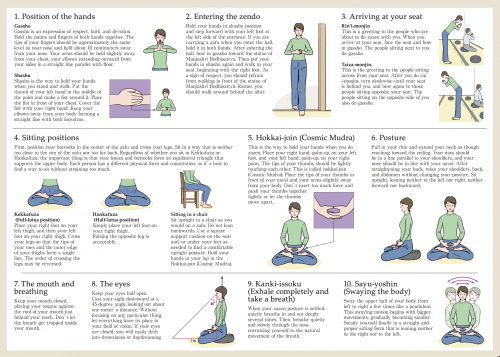
Resource: Beginning Instructions – Soto Zen Tradition